“My child is only three. Is it too early to start English?” “My child is already in third grade. Is it too late to start now?” These are some of the questions parents ask us most often. The truth is, there’s no single right answer that applies to every child. Rather than worrying about an exact age, it’s more important to understand how children learn at different stages and to support them in ways that fit.
Is Earlier Always Better? First, Understand How Languages Are Learned
Language research generally finds that younger children are better at imitating sounds, which makes it easier for them to naturally pick up pronunciation and intonation close to that of a native speaker. That’s one reason many parents want their children to start English early.
However, “starting early” doesn’t mean “mastering it early.” Older children may need a bit more practice with pronunciation, but their comprehension, logical thinking and focus are more mature, so they’re often more efficient at learning grammar, reading and writing. In other words, every age has its own strengths. The key is using the right approach.

What to Focus on at Each Age
Ages 3 to 6: Build a Positive Connection Through Listening and Play
Preschoolers have short attention spans, so songs, picture books, games and movement activities are the best ways for them to encounter English. At this stage, the goal isn’t to memorize lots of words, but to help children find English fun, feel comfortable with it, and get used to its sounds and rhythms.
- Play English songs or nursery rhymes for a short, set time each day
- Read English picture books with lots of pictures and few words together
- Use simple English to name everyday objects, colors and actions
Lower Elementary Grades: Lay the Foundation for Pronunciation and Decoding
Six- and seven-year-olds begin recognizing large numbers of written words, which makes this a great time to learn phonics. Once children learn the rules linking letters to sounds, they can try sounding out words they’ve never seen before and gradually build the ability to read on their own.
Middle and Upper Elementary Grades: Balanced Listening, Speaking, Reading and Writing
At this stage, children’s comprehension improves noticeably. They can start building vocabulary systematically, learn basic sentence patterns and read leveled readers that match their ability. If your child is interested, exams such as Cambridge Young Learners English (YLE) can also serve as milestones that make progress visible.
Starting in Junior High or Later: It’s Still Not Too Late
If your child started English later, there’s no need to worry too much. Older children can understand rules and review on their own. With the right methods and consistent effort, they can still make steady progress and be ready for junior high coursework and the Comprehensive Assessment Program (CAP), Taiwan’s junior high exit exam.
Three Common Myths Among Parents
Myth 1: Learning English Too Early Will Hurt a Child’s Chinese
In general, for children growing up in a Chinese-speaking environment, moderate exposure to a second language does not hinder the development of their first language. As long as the family keeps up rich conversation and reading in Chinese, both languages can grow side by side. If your child has specific language development concerns, we recommend consulting a medical professional or speech-language therapist first.
Myth 2: If Kids Just Listen Enough, They’ll Pick It Up
Listening is the foundation of language learning, but passively leaving English videos on usually has limited results. Children need someone to respond to them, chances to speak, and meaningful situations in which to use the language before what they hear truly becomes their own ability.
Myth 3: A Late Start Means They’ll Never Catch Up
Language learning is a long-term, cumulative process, and consistency matters more than when you start. Many children who begin later make remarkable progress because they are highly motivated and understand things well.
Signs Your Child May Be Ready
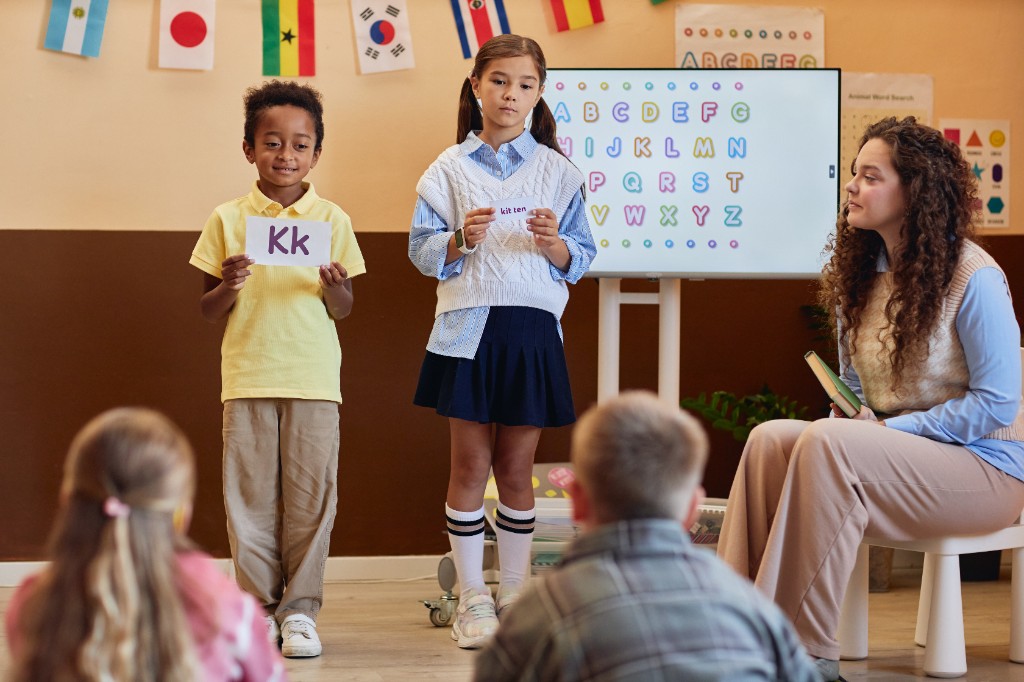
Rather than looking only at age, observe your child’s own readiness:
- Can stay focused on an activity for about 20 to 30 minutes
- Shows curiosity about English songs, cartoons or picture books
- Is willing to join in with the teacher and classmates in a group
- Has a basic command of Chinese and can express their own needs
If your child isn’t yet comfortable in group classes, you can start at home with shared reading and English songs, then take the next step once they’re ready.
Four Things That Matter More Than “What Age to Start”
- Consistent exposure Ten-plus minutes of exposure every day usually adds up more easily than one long, intensive session a week.
- Meaningful contexts Let English show up in games, daily life and your child’s interests, not just on test papers.
- Positive learning experiences Encourage more and compare less, to protect your child’s courage to speak up.
- Classes at the right level Material that’s too hard leads to frustration, while material that’s too easy leads to boredom. Finding content that fits your child’s level is important.
Final Thoughts: Finding the Right Starting Point for Your Child
Since it was founded in 2003, English Learning Corner has helped children of all ages learn English, from our early-childhood English classes to our junior and senior high exam-prep classes. We believe every stage has a suitable starting point. If you’re not sure where your child should begin, we welcome you to book a free trial class and placement test, so we can get to know your child’s current level together and plan a learning path that fits.